Showing posts with label photography. Show all posts

Wednesday, October 12, 2022

Richard Avedon: Nureyev's Foot and the 20th Century


A few weeks ago, I was looking through a website when I came upon a truly amazing photograph. It was titled, "Nureyev's Foot." I was struck how beautifully it was lighted and cropped. That foot seemed to say everything about the control, power and strength required of such a famous ballet dancer as Rudolf Nureyev. I had to know who had taken the photo.

After some digging through the internet, I found the photographer. It turned out to be Richard Avedon and I thought, "but, of course."


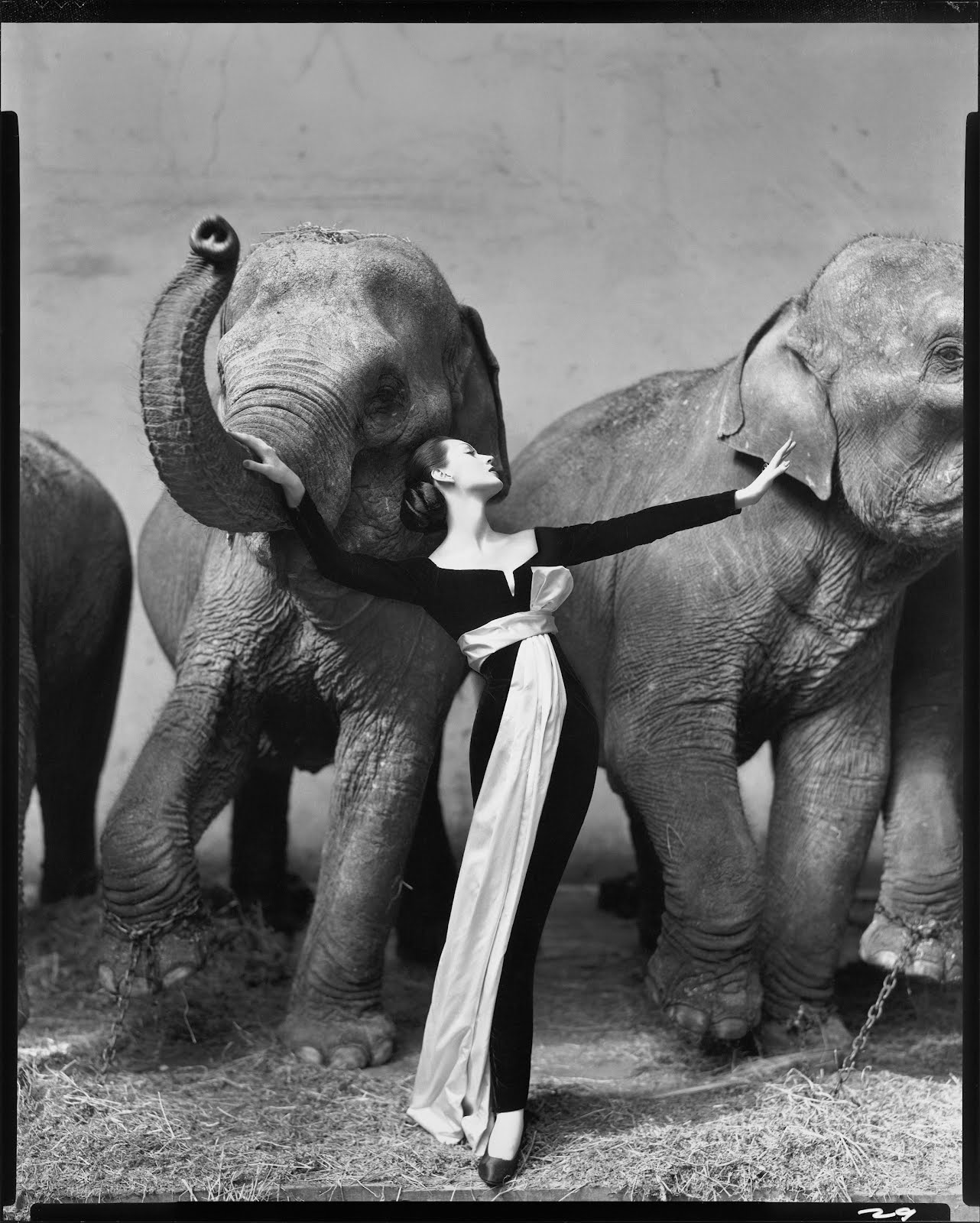
Avedon (1923-2004) has been described as the premiere photographer of style and beauty for the second half of the 20th century. Yet, a career that started at age 12 using a Brownie Box camera and later by taking Merchant Marines' photographs for I.D. cards hardly seems like the basis for such an outstanding career. 

However, with his passion for photography, he evolved a style that immediately identified a picture as an "Avedon." While Avedon was known for his fashion magazine work, his real love was portraiture. 

He preferred not to use props or soft lights, but to capture the inner worlds of his subjects. He would ask probing questions and find the vulnerable and interior for his portraits.

Beyond the fashion and portraiture, Avedon spent his time taking photos that chronicle images of the times. He even created a book titled, "In the American West." It was full of the images of the everyday lives of people.


In 1974, Avedon, who was only 51, had to limit his activities due to heart inflammation. Yet, he would continue to work until age 81. It was while on assignment for The New Yorker, Avedon suffered a stroke and died. He left a legacy of the most iconic representations of famous figures of the 20th century - including Nureyev's foot. Do you recognize any of these photos?


Wednesday, October 17, 2012

Why Not Just Take a Photo?

Before photography, hyperrealism was important because people wanted records of events, possessions, and ceremonies.There was only one way to accomplish that goal - hire an artist. (17th Century Flemish paintings)
Since photography came into its own in the late 1800s, artists were free to paint in more abstract manners. The movement that comes to mind as exemplifying this freedom was Impressionism.

Yet, today, there are certain artists who paint works that are referred to as "photorealism." They are so technically masterful that often the question arises, "Is that a photo or a painting?"

There have been several recent articles written about visual artists who paint photorealistically (hyperrealism). The thrust of these articles is to ask the question, "What's the point? "

Those who disagree that photography has replaced hyperrealistic painting insist that a photograph cannot capture what the hand of a painter can do - greater depth of field, understanding of nature, combinations of real and imagined.

Below are the works of three well-known photorealistic painters. The question is: Where do you think? Would it be just as well to take a photo? (click on image to enlarge)
Roberto Bernardi: (Oils)

Steve Mills: (Oils)

Eric Christensen: (Watercolor)
(He also has a video:http://www.youtube.com/watch?disv=RNKk9G-Yzjk)

Tuesday, March 13, 2012

Nureyev's Foot and Other Iconic Images

A few weeks ago, I was looking through a website when I came upon a truly amazing photograph. It was titled, "Nureyev's Foot." I was struck how beautifully it was lighted and cropped. That foot seemed to say everything about the control, power and strength required of such a famous ballet dancer as Rudolf Nureyev. I had to know who had taken the photo.

After some digging through the web, I found the photographer. It turned out to be Richard Avedon and I thought, "but, of course."

Avedon (1923-2004) has been described as the premiere photographer of style and beauty for the second half of the 20th century. Yet, a career that started by taking Merchant Marines' photographs for I.D. cards hardly seems like the basis for such an outstanding career. However, with his passion for photography, he evolved a style that immediately identified a picture as an "Avedon." While Avedon was known for his fashion magazine work, his real love was portraiture.

At age 81 while on assignment for The New Yorker, Avedon suffered a stroke and died. He left a legacy of the most iconic representations of famous figures of the 20th century - including Nureyev's foot. Do you recognize any of these photos?


Tuesday, February 21, 2012

Eve Arnold, Marilyn Monroe and Iconic Images


When photographer Eve Arnold (1912-2012) died at age 99, she left a legacy of iconic images of postwar 20th century. Quoting her obit in the New York Times, Arnold photographed "images of subjects as diverse as Marilyn Monroe and migratory potato pickers." Diverse indeed.

In the golden era of photojournalism reflected by magazines such as LIFE and LOOK, Arnold was a star photographer. Arnold gained the trust of celebrities such as Marilyn Monroe, Joan Crawford, and Marlene Dietrich. This sense of trust allowed Arnold to photograph them at their most relaxed.

Ms. Arnold's life was filled with kudos. She wrote several pictorial books of her photographic experiences, received world-wide recognition and even received the OBE (Order of the British Empire).

Below are some of her iconic images. Do you recognize any of them?


Tuesday, April 26, 2011

When the Bells Tolled for Her


Her life was short. She was 26 when she died and she was buried days later on her 27th birthday. Yet she live long enough to make her mark on photojournalism - as the first woman to cover a war and die while doing so.

It was 1936 and Gerda Taro (nee Gerta Pohorylle; 1910-1937), was a photo assistant to Robert Capa (nee Endre Ernő Friedmann; 1913-1954), a photographer and photojournalist best known for his photos on the front lines of war zones.

Taro was a German Jewess. She knew about fascism first-hand. She opposed the Nazi party in Germany and was arrested for distributing anti-Nazi pamphlets. After her release, the family left Germany.

When the Spanish Civil War broke out, she went with Capa to cover the anti-fascists soldiers. It was there that she established herself as a war photographer. Below are some of her photos at Navacerrada Pass, Segovia front, Spain:


(This failed offensive was the basis for Ernest Hemingway's, "For Whom the Bells Tolled.")

A year later, Taro would be killed in a freak war accident. Her fame was such that LIFE magazine printed two full pages about her.

Tuesday, April 5, 2011

Brian Lanker Dreamt a World


Brian Lanker died recently. He was 63 years old. I came to know of him as an extraordinary photojournalist through his book, "I Dream a World: Portraits of Black Women Who Changed America."

I did not know Mr. Lanker personally. Yet, having been touched by his book, I was saddened to know that such a compassionate and caring man had died.

He must have have a special understanding of women. After all, his Pulitzer Prize for feature photography was his photo titled, "Moment of Life." It captured the moment just after the birth of a baby and the look of delight on the mother's face.

Lanker had to have been an empathetic man. He said that he came to understand the "double minority" of black women after reading "The Color Purple." Then, when he heard Barbara Jordan (1936-1996),the first Southern black woman elected to the House of Representatives, give the keynote address at the 1976 Democratic Convention, he said, "You're the one who belongs in the White House."

Like Barbara Jordan, many black women had overcome daunting odds. Lanker wanted to acknowledge their accomplishments. He received a two-year grant from Eastman-Kodak to photograph and quote 75 black women. Some were well-known - many were unsung heroines.


The exhibition of Lanker's photographs of the women debuted at the Corcoran Gallery of Art in Washington, D.C. to record attendance. His book proved so popular that it is now in its 14th printing.

Thank you, Brian Lanker, for creating a homage to courageous women and for using your talents in the name of kindness, compassion and a strong sense of justice.